
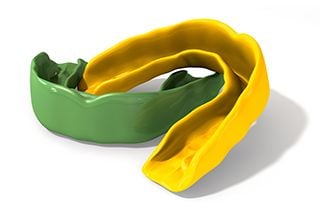
 While you’re living your active life, be sure to protect your smile. A mouthguard is essential safety gear whenever you participate in any sport or activity that could lead to dental trauma.
Oral and dental injuries are very common for athletes, and often these injuries can be prevented or reduced with a mouthguard. Mouthguards are designed to absorb and distribute the force of impact on teeth, jaw joints, and jaws. Mouthguards help prevent cuts and lacerations to the gums, lips, inner cheeks, and tongue.
That’s why the American Dental Association recommends wearing a mouthguard for, among other activities, baseball, basketball, boxing, cycling, hockey, football, gymnastics, lacrosse, martial arts, racquetball, rugby, track and field, skateboarding, skiing, snowboarding, skydiving, soccer, softball, surfing, volleyball, water polo, weightlifting, and wrestling.
In fact, if you participate in any sport or activity with the potential for collision with hard surfaces, equipment, or other bodies, you should wear a mouthguard. A mouthguard is doubly effective if you wear braces, because in case of impact it protects your braces and also shields the inside of your mouth from contact with brackets and wires.
Choose a mouthguard that provides effective protection, fits comfortably, and allows you to breathe and speak easily. There are three common options available:
- Stock
Stock appliances can be found at sporting goods stores and drugstores. These are the most affordable option, but, because they are pre-formed, with a narrow range of sizes, they may not give you an ideal fit.
- Boil-and-Bite
This type of over-the-counter mouthguard generally provides a better fit than a stock guard can. The guard is heated first to soften it, and then, after cooling, the user bites down and molds the mouthguard to the teeth and mouth.
- Custom
Your dentist can create a mouthguard specifically for you. While they are more expensive, custom mouthguards are the most effective, durable, and comfortable guards available. With less overall thickness and a precise fit, a dentist-fabricated guard makes both talking and breathing easier while you’re exercising.
Caring for Your Mouthguard
A mouthguard can’t protect you unless it’s worn consistently, and it won’t protect you effectively unless it’s cared for properly.
- Keep Your Mouthguard Clean
If you don’t clean your mouthguard as recommended, plaque, viruses, bacteria, fungi, and other organisms can collect on your guard and in your case, especially when the guard is put away damp. Keep your mouthguard clean, healthy, and odor-free by rinsing it after use and brushing daily with a soft toothbrush. Let it dry before returning your guard to a clean, dry case. Ask your dentist about cleaning tips for your specific mouthguard.
- Protect Your Mouthguard
When your mouthguard isn’t in your mouth, it should be in its case. Sharp edges on cracked or broken guards can damage soft tissues. Don’t chew your guard because this can break it. Be careful where you leave your mouthguard because hot water, hot surfaces, and sunlight can warp it.
- Replace Your Mouthguard as Needed
A mouthguard that doesn’t fit properly doesn’t protect properly. If your mouthguard is showing signs of wear, it’s probably time to replace it. If your mouthguard is broken or warped, don’t try to trim or repair it yourself. Your dentist can tell you if your guard is working effectively or needs repair or replacement.
Your smile deserves the best protection you can provide. Talk to your dentist about how a mouthguard can help you enjoy your active life to the fullest.
